


La Chandeleur: What's behind French Crêpe Day ?
La Chandeleur is often reduced to “crêpe day,” but there’s more to it than that. In this article, I explain what La Chandeleur really is, why it takes place on February 2nd, how it’s celebrated in France today, and how it differs from Mardi Gras — with personal memories and a simple family crêpe recipe along the way.
FOOD
Estelle Materne - de Parlons French
1/30/20263 min read
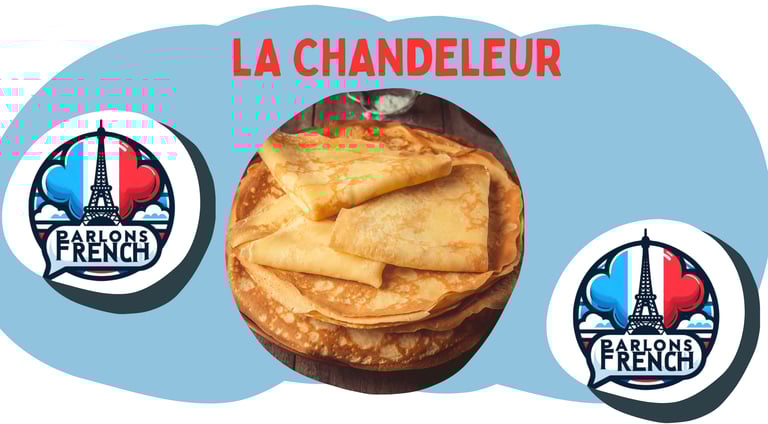
If you’re learning French or living in France, you’ve probably heard people talk about La Chandeleur around early February. More often than not, it’s reduced to one simple idea: crêpes.
And yes, crêpes are a big part of it — but La Chandeleur is actually a little more meaningful than that.
It’s one of those small French traditions that quietly mixes history, culture, and everyday life.
Let me explain.
What is La Chandeleur?
La Chandeleur is celebrated every year on February 2nd.
Historically, it’s a Christian celebration marking the presentation of Jesus at the temple, forty days exactly after Christmas. The name comes from chandelle (candle), and the tradition is closely linked to light — symbolizing longer days and the gradual end of winter.
That said, in modern France, La Chandeleur is no longer a religious event for most people.
Today, it’s mainly a cultural and family tradition, simple and informal.
No pressure.
No big rituals.
Just an excuse to make and eat crêpes.
Why Crêpes?
Crêpes are thin, round, and golden — often said to represent the sun and the return of light after winter.
But there’s also a very practical explanation:
crêpes are made with basic ingredients that people traditionally had at home during winter — flour, eggs, milk.
Over time, La Chandeleur naturally became “crêpe day” in France.
How Do the French Celebrate It Today?
Very simply.
Most people celebrate La Chandeleur at home, with family or sometimes friends.
There are no costumes, no parades, no public celebrations.
Children love it, even if they don’t really know why crêpes are involved.
Adults enjoy the moment — because it’s familiar, comforting, and easy.
In my family, crêpes weren’t even limited to La Chandeleur.
When I was a child, Saturday night was crêpe night. Every week.
It was a family ritual, not connected to any religious date — just a moment together.
And the recipe I still use today is the one I grew up with.
My Go-To Crêpe Recipe (Very Easy)
Here’s the recipe from my childhood:
6 eggs
500 g flour
1 liter of milk
1 tablespoon of melted butter (or oil)
1 pinch of salt
Mix everything until smooth.
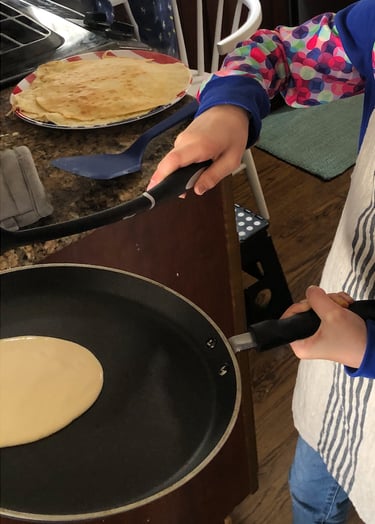
Heat a lightly buttered pan, pour in one ladle of batter, let it cook for a few minutes, flip, and cook the other side until lightly golden.
Sweet or savory toppings — anything goes.
That’s also what La Chandeleur is about today:
simple food, shared moments, and traditions that live through family habits.
A Common Confusion: La Chandeleur vs. Mardi Gras
If you’re not French (and even if you are!), it’s very easy to confuse La Chandeleur and Mardi Gras.
They’re close on the calendar and both involve food — but they’re very different.
La Chandeleur:
Fixed date: February 2nd
Calm, family-oriented
Crêpes
No costumes
Mardi Gras:
Date changes every year
Comes just before Lent
Linked to excess and celebration
Costumes, parades, rich pastries (beignets, doughnuts…)
As a child, I remember one Mardi Gras very clearly: I was ten years old and had broken my arm.
That year, I dressed up as an injured patient, covered in bandages, as if I had just left the hospital.
That’s Mardi Gras energy — creative, playful, a little chaotic.
Very different from the quiet comfort of La Chandeleur.
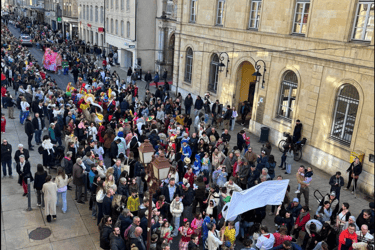
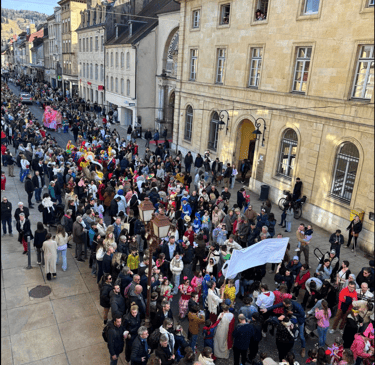
The Carnaval Défilé last year in my hometown, Pontarlier, Doubs
Why This Tradition Matters (Especially for Expats)
If you’re an expat in France, La Chandeleur is one of those traditions that’s easy to adopt.
You don’t need to understand everything about French history or religion.
You just make crêpes.
And for one evening, you feel a little more local.
One Last Question for You
Is there a celebration in your country that’s a bit like La Chandeleur or Mardi Gras?
Do you have a childhood memory tied to food and family traditions?
If so, I’d love to hear about it.


written by Estelle Materne
Estelle has been a language teacher for the past 15+ years, she specializes in elevating intermediate learners to a close to native way of using French.
She's lived and taught in many countries around the globe, including China and the US , and she's now back to her home country, France, from where she keeps teaching her beloved language online !


Follow Me



Learn French with clarity, confidence, and real human guidance
Content :
Podcast (Authentic French)
Blog (Authentic ressources)
Interactive Map (Authentic French speakers)